Maximizing Safety at Heights: MSA Roof Line Fall Arrest Systems in Johor Bahru
Key Takeaways
🔸MSA systems work on any roof type: Whether you have metal, concrete, Klip-Lok, or membrane roofs, MSA has solutions that fit.
🔸Constant Force Posts make installation easier: These special posts adjust automatically to different roof angles without custom engineering.
🔸Energy Absorption Saves Lives: The patented technology limits fall forces to safe levels, preventing injuries even during worst-case scenarios.
🔸JZ Industry is your certified installer: As a certified MSA Roofline installer and master distributor in Johor Bahru and Malaysia, we handle everything from design to installation.
🔸Regular Inspection Keeps Workers Safe: Annual inspections and 5-10 years recertification ensure your system stays compliant and effective.
Introduction
Worker falls from heights remain one of the most dangerous workplace hazards in Malaysia. One wrong step. One missed anchor. One moment of inattention. The consequences can be catastrophic.
DOSH regulations require fall protection for any work above 2 meters. Under the OSH Amendment Act 2022, fines for safety violations can reach RM500,000, plus possible imprisonment. More importantly, a fall can end a worker’s career or life. This is why roof line fall arrest systems exist. They’re the difference between a worker going home to their family and a workplace tragedy.
If your business operates in Johor Bahru and your team works at heights, whether on roofs for maintenance, inspection, or cleaning, you need a fall protection system that actually works such as MSA roof line fall arrest systems that provide reliable protection.
What Is a Roof Line Fall Arrest System?
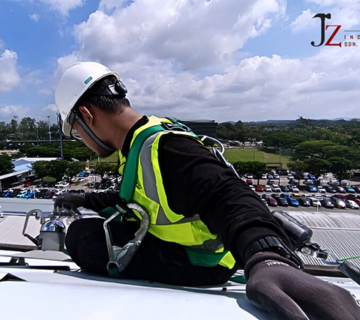
A roof line fall arrest system is a permanent safety anchor installed on your roof. Workers attach their harnesses to this system, which catches them if they fall. Think of it like a seatbelt for people working at heights.
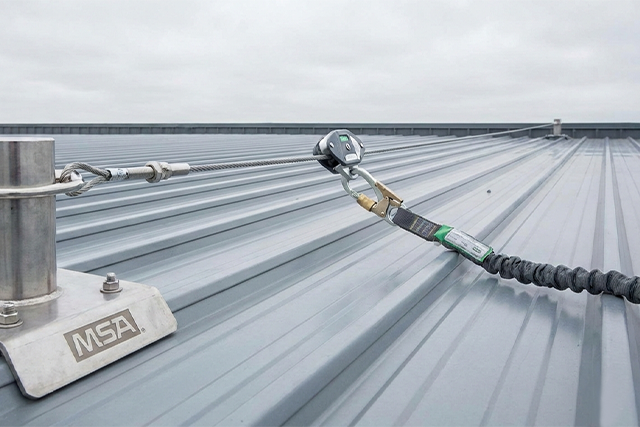
MSA systems include several parts:
- Anchor points that bolt to your roof structure
- Horizontal lifelines (cables or rails) connecting the anchors
- Energy absorbers that slow down a fall safely
- Connection points where workers clip their harnesses
The system spreads across your roof, giving workers freedom to move while staying protected. Unlike temporary solutions, these permanent systems stay in place for decades.
How Do MSA Systems Work with Different Roof Profiles?
MSA fall protection adapts to almost any roof type without expensive custom work. The secret is in the mounting hardware that fits various roof structures. Here’s how MSA handles different roofs:
Metal Roofing (Standing Seam, Klip-Lok, Corrugated):
- Uses specialized mounting brackets or clamps that grip the seams or ridges
- No drilling through the waterproof layer
- Installs without damaging roof warranty
Concrete Roofs:
- Expansion bolts anchor directly to concrete
- Tested to hold several tons of force
- Works with flat or sloped concrete surfaces
Membrane Roofs (EPDM, TPO, PVC):
- Special base plates spread weight across larger areas
- Prevents puncturing the waterproof membrane
- Compatible with most commercial roofing systems
Trapezoidal Metal Decks:
- Mounting brackets fit between the deck ridges
- Connects to structural supports underneath
- Common in factories and warehouses
The key advantage? MSA’s engineering team has already tested these configurations. You don’t need expensive custom engineering for standard roof types.
Pro Tip: Before installing any fall protection, have your roof structure assessed. The system is only as strong as what it’s attached to. MSA-certified installers like JZ Industry check structural capacity before recommending specific systems.
What Are Constant Force Post and Why Do They Matter?
Traditional horizontal lifeline systems need careful engineering. Every cable must be tensioned exactly right. Too loose, and the fall distance increases. Too tight, and you stress the anchors.
The MSA range of Latchways® Constant Force Post Horizontal Lifeline Systems are special anchor posts that automatically adjust tension as the cable moves. This innovation makes installation simpler and systems more reliable. Uses a spring-loaded anchor point that deploys smoothly when a worker falls, absorbing the impact energy and limiting forces to safe levels (around 6-10 kN per post).
The clever part of MSA’s Constant Force Post system is its energy-absorbing coil. Here’s how it works:
When a worker is moving normally along the roof, there’s no tension in the system. The Constant Force Post sits there, doing nothing, invisible to your daily operations.
But the moment a worker falls, the system springs into action. The patented coil inside the post deploys instantly. This deployment isn’t sudden or jarring, it’s controlled and smooth. The coil absorbs the energy of the fall, acting like a shock absorber in a car.
These systems offer several advantages for your facility, including faster installation with less time spent calculating tensions, lower installation costs due to simpler engineering requirements, greater tolerance for minor installation variations, and the flexibility to expand the system more easily in the future.
Think of Constant Force Posts like airbags in a car. They deploy when needed to absorb impact, protecting both the person and the structure.
Why Choose JZ Industry as Your MSA Installer in Johor Bahru?
JZ Industry is an MSA-certified installer for fall protection systems in Johor Bahru and Malaysia. This certification means we’re trained and authorized to design, install, and maintain MSA roof line systems.
Site Assessment: We don’t just show up with a standard design. We inspect your roof, its structure, age, material, and any existing damage. We identify where workers actually need protection and calculate load requirements correctly, providing systems that meet Malaysian safety standards.
Custom Design: Based on the assessment, we create a system tailored to your roof. Every post placement, every lifeline run, every connection point is designed for your specific situation.
Worker Training: Your team needs to know how to use the system. We provide NIOSH-certified Work at Height training on harness use, anchor points, rescue procedures, and inspection protocols.
Documentation & Compliance: We provide all installation documentation, certifications, and compliance records. This protects you in the unlikely event of an incident and proves you’ve met Malaysian workplace safety regulations.
Why This Matters: Non-certified installers might offer lower prices, but mistakes in fall protection can be deadly. One incorrectly installed anchor could fail during a fall. Certification ensures the job is done right.
What About Warranty and System Lifespan?
MSA fall protection systems come with manufacturer warranties covering defects and structural integrity. Regular annual inspections help catch unreported damage and keep your system safe.
Expected Lifespan:
Horizontal and Vertical Lifeline Systems:
- Up to 20 years in inland environments
- Up to 15 years in marine/coastal areas
System components:
- D-Rings and anchor hardware: Up to 20 years (inland), 15 years (marine)
Why annual inspections matter:
- Catch damage before it becomes dangerous
- Detect wear that workers might not report
- Maintain system certification
- Required by Malaysian safety regulations
- Can literally save lives
What affects lifespan:
- Coastal areas (salt exposure reduces lifespan)
- Industrial environments (chemical exposure)
- Frequency of use
- Quality of installation
- Regular maintenance and inspection
JZ Industry offers maintenance contracts covering annual inspections, minor adjustments, and component replacement. This keeps your system compliant and extends its working life.
Conclusion
MSA roof line fall arrest systems provide reliable, long-lasting fall protection for Johor Bahru facilities. The combination of proven engineering, adaptable mounting options, and innovations like Constant Force Posts makes these systems suitable for most industrial and commercial buildings.
Contact safety equipment suppliers in Johor Bahru (JB) like JZ Industry for a site assessment. We’ll evaluate your roof structure, recommend the appropriate MSA system, and provide a detailed quote. As an MSA-certified installer, we handle everything from engineering to installation to ongoing maintenance.
Don’t wait for a DOSH inspection or, worse, an accident to address fall protection. Protect your workers and your business with a properly engineered MSA system installed by certified professionals.
Frequently Asked Questions (FAQ)
No. The roof fall arrest system is designed to limit the force on your roof structure. Even when it deploys under full load, the impact is controlled and won’t penetrate or structurally damage most roof types. The Constant Force Posts specifically absorb energy to protect both the worker and your roof structure.
We don’t recommend it. Installation requires engineering calculations, structural assessment, and specialized knowledge. Improper installation can make the system unsafe and void the warranty. Use a certified installer like JZ Industry to ensure proper installation and full warranty coverage.
Costs vary based on your roof size, type, and the number of anchor points needed. Factors affecting cost include roof accessibility, structural reinforcement requirements, and system complexity. Contact us for a site assessment and detailed quote tailored to your specific facility.
The system must be immediately tagged as “out of service” and cannot be used until a qualified person inspects it. Depending on the damage, it may need recertification or component replacement before reuse. This is a critical safety requirement, never use a system after deployment without professional inspection.
Yes. Work-at-height regulations in Malaysia require fall protection systems for workers exposed to fall hazards at heights over 2 meters. DOSH actively enforces these requirements, with penalties up to RM500,000 for non-compliance under the OSH Amendment Act 2022.