MSA Roof Line Fall Arrest Systems for Johor’s New Wave of Commercial Infrastructure
Key Takeaways
🔸Johor Bahru’s infrastructure boom creates unique fall protection needs: New data centers, logistics hubs, and manufacturing facilities require permanent roof access for equipment maintenance.
🔸Data centers demand continuous roof access: Cooling systems, solar panels, and telecommunications equipment need monthly or weekly maintenance requiring safe roof access solutions.
🔸JZ Industry is MSA’s certified roofline installer: We’re listed on MSA’s official website as the certified installer for fall protection engineered systems across Johor Bahru (JB) and Malaysia.
🔸MSA-certified installation protects your warranty: Using certified installers ensures compliance with MSA standards and procedures, preserving warranty coverage and system reliability.
Introduction
Johor Bahru (JB) is experiencing unprecedented commercial development. Data centers are rising to serve Southeast Asia’s digital economy. Logistics hubs support regional distribution networks. Advanced manufacturing facilities produce high-tech components.
Every new building brings the same critical challenge: workers need safe roof access for maintenance. HVAC systems need servicing, solar panels require cleaning, and telecommunications equipment needs upgrading. Without proper fall protection, these routine tasks become deadly risks.
This guide explains how MSA roof line fall arrest systems protect workers in Johor Bahru’s new commercial infrastructure, why certified installation matters, and how JZ Industry supports the region’s growth with professional fall protection solutions.
Why Do Data Centers Need Permanent Roof Access Systems?
Data centers require frequent roof access for cooling system maintenance, equipment upgrades, and infrastructure inspections, often weekly or monthly rather than occasionally. Temporary fall protection isn’t practical for this access frequency.
Data centers generate enormous heat requiring constant cooling system maintenance. Technicians check refrigerant levels, clean condenser coils, and repair equipment failures. Solar panels increasingly installed on roofs require quarterly cleaning in Johor Bahru’s tropical climate. Backup generators need regular testing and servicing.
Telecommunications equipment for network connectivity requires technician access for upgrades and repairs. Emergency repairs can’t wait for temporary scaffolding, permanent fall protection enables immediate safe access.
The more often workers access roofs, the higher the cumulative fall risk. Weekly roof access means more exposure events per year. In this case, permanent MSA systems eliminate setup time while ensuring consistent protection.
What Fall Hazards Exist in Modern Industrial Facilities?
Modern industrial roofs present multiple fall hazards including perimeter edges, skylight openings, rooftop equipment creating trip hazards, and varying roof levels. Each hazard type requires specific protection approaches.
Perimeter edges where roofs meet building sides present obvious fall risks. Skylights create fall-through hazards, materials may appear solid but can’t support worker weight. Falls through skylights into building interiors cause severe injuries.
Rooftop equipment like HVAC units and solar panels create obstacles workers must navigate. Tripping over equipment or cables while carrying tools increases fall risk. Multi-level roofs create elevation differences at transitions between roof sections.
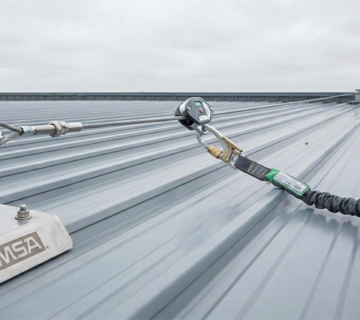
MSA roof line systems address these hazards through horizontal lifelines spanning roof areas and anchor points positioned near hazard zones. Workers attach once and remain protected while accessing all roof areas.
How Do Logistics Hubs and Warehouses Use Roof Access?
Large logistics facilities require roof access for building maintenance, solar panel operations, and rainwater management systems, creating ongoing fall protection needs across massive roof areas. Single-point anchor systems don’t provide adequate coverage.
Johor Bahru (JB) serves as a regional logistics hub with warehouses exceeding 100,000 square meters under single roofs. These massive structures need regular roof maintenance but present unique fall protection challenges due to their scale. Roof membrane inspections identify potential leaks before interior damage. Solar panel installations require cleaning and maintenance. Gutter and drainage cleaning prevents monsoon flooding.
A 100,000 square meter warehouse might have workers 200+ meters from building edges. Installing anchor points every few meters becomes impractical. MSA horizontal lifeline systems span these distances with fewer anchor points, providing continuous protection.
Pro Tip: When planning fall protection for large facilities, calculate worker travel distances. If workers walk more than 50 meters regularly, Constant force post horizontal lifeline systems prove more practical than individual anchor points.
Why Does Certified Installation Matter for Commercial Projects?
Professional installation by certified fall protection systems providers ensures proper engineering, structural assessment, and compliance documentation meeting Malaysian safety standards. JZ Industry’s MSA certification means installations meet manufacturer specifications and DOSH safety requirements.
Installation by MSA-certified installers ensures compliance with MSA installation standards and procedures, ensuring does not void the warranty. Using non-certified installers may compromise warranty coverage if installation errors lead to system failures.
Commercial projects face stricter oversight than smaller facilities. Insurance companies scrutinize safety measures, DOSH conducts regular inspections, and project developers want assurance systems to work correctly.
MSA certifies installers through comprehensive training covering system design, structural load calculations, proper anchor point installation, and testing procedures. This training ensures installers understand both products and application principles.
Certified installers can verify installations through MSA’s official channels. Developers may verify JZ Industry’s certification on MSA’s website under Fall Protection Engineered Systems for Malaysia.
Certified installers provide complete engineering documentation including structural load calculations proving the roof can support fall arrest forces, anchor point specifications and installation procedures, system design drawings showing component placement, and testing certificates confirming installation meets standards.
This documentation protects developers during DOSH inspections, satisfies insurance requirements for liability coverage, and provides maintenance records for future facility management.
Using uncertified installers exposes developers to liability if systems fail. Courts examine whether proper installation procedures were followed during incident investigations. Certification demonstrates due diligence in selecting qualified installers.
What Training Supports Commercial Facility Operations?
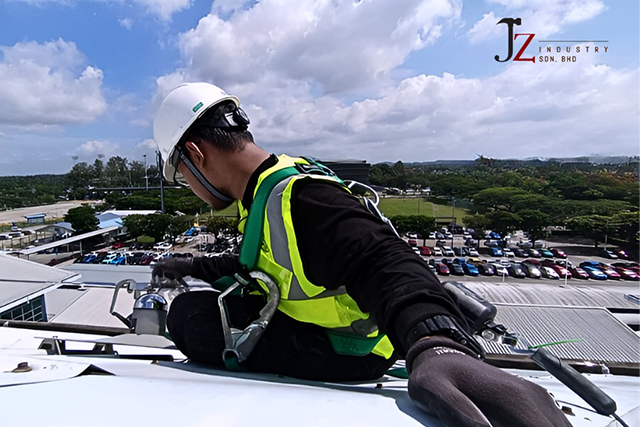
JZ Industry provides NIOSH-certified Work at Height training ensuring facility maintenance teams can safely use installed MSA systems. Training covers harness fitting, anchor point usage, and rescue procedures specific to each facility.
Installing fall protection systems addresses only half the safety equation. Workers must know how to use systems correctly. Improper use defeats even properly installed systems.
Equipment familiarization teaches workers about harness components, how to inspect equipment before use, proper donning procedures ensuring secure fit, and connecting to anchor points or horizontal lifelines correctly.
Site-specific training covers the actual installed system showing anchor point locations, safe movement paths across roofs, areas requiring special attention due to hazards, and rescue procedures if falls occur.
As Malaysian regulations require refresher training ensuring workers maintain competency. JZ Industry provides annual sessions reviewing procedures, addressing questions, and updating workers on system modifications. New employee training ensures all workers receive proper instruction before first roof access.
How Does the JZ Industry Support Johor Bahru’s Growing Infrastructure?
As MSA’s certified installer in Johor Bahru (JB) and across Malaysia, JZ Industry provides complete fall protection solutions from initial assessment through installation to ongoing training and maintenance. We support commercial developers throughout project lifecycles.
Johor Bahru’s rapid development creates demand for experienced fall protection partners who understand both local conditions and international safety standards.
Site assessment evaluates roof structures and identifies hazards. System design creates custom configurations matching each facility’s requirements. Professional installation ensures systems meet MSA specifications and Malaysian standards. Training programs prepare maintenance teams, and maintenance support includes annual inspections and technical consultation.
While based in Johor Bahru (JB), we serve commercial projects across Malaysia. Our certification covers nationwide installations. We understand Malaysian regulations, weather conditions, and local building practices preventing common problems foreign suppliers encounter.
Conclusion
Johor Bahru’s commercial infrastructure growth—from data centers to logistics hubs to advanced manufacturing, creates increasing demand for professional fall protection solutions. MSA roof line systems provide reliable, certified protection while JZ Industry’s local presence ensures proper installation and ongoing support.
Contact industrial safety suppliers in Johor Bahru (JB) like JZ Industry for fall protection consultation on your commercial project. As MSA’s certified installer in Johor Bahru and Malaysia, we’ll assess your facility requirements, design appropriate systems, and provide complete installation and training services.
Frequently Asked Questions (FAQ)
Temporary systems like portable anchors work for occasional roof access but require setup time before each use. Permanent MSA roof line systems stay installed providing immediate safe access. For facilities requiring weekly or monthly roof access like data centers, permanent systems eliminate setup delays and reduce cumulative risk. Read our comprehensive guide on MSA roof line fall arrest systems for detailed technical information.
Yes. We provide NIOSH-certified Work at Height (WAH) training as part of complete fall protection solutions. Training covers harness use, anchor point connection, rescue procedures, and site-specific safety protocols. We offer both initial comprehensive training and annual refresher sessions meeting Malaysian regulatory requirements.
Absolutely. Many commercial buildings in Johor Bahru (JB) were built before current fall protection awareness. We assess existing roof structures, verify load-bearing capacity, and design MSA systems compatible with current building conditions. Retrofits may require additional structural reinforcement depending on roof age and condition, but solutions exist for virtually all commercial buildings.
Regular inspections are recommended best practice and required by manufacturers. JZ Industry provides comprehensive inspection services checking anchor integrity, horizontal lifeline condition, and component wear. We document all inspections providing compliance records for DOSH audits. Between scheduled inspections, facility teams perform visual checks before each use. Systems typically require minimal maintenance when properly installed and used.
MSA systems are designed for expansion. If your facility adds new roof sections, equipment, or changes access requirements, we assess existing systems and design compatible extensions. Because we maintain detailed installation documentation, future modifications integrate seamlessly with original installations. This scalability makes MSA systems ideal for growing commercial operations in Johor Bahru’s expanding industrial zones.